
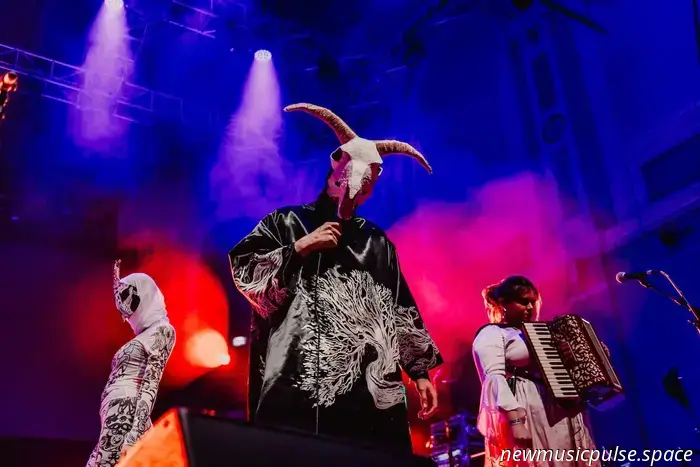
There’s a moment at a Huartan performance — typically when the masked dancers meld into the audience and the synths begin to vibrate — when time feels fluid. The present dissolves into something older and more enigmatic. A primal rhythm resonates beneath the drum machines. It’s not merely nostalgia; it’s akin to the act of remembering.
Hailing from the Gaeltacht quarter of West Belfast, Huartan has emerged as one of Ireland's most dynamic cultural influences: an award-winning trad-electronic group revitalizing endangered Irish-language songs and enveloping them in a visual ritual that feels part club night, part folkloric séance. Founded in 2023, the ensemble has already earned the Gradaim Nós Newcomer of the Year Award, Live Act of the Year at the 2024 NI Music Prize, and the inaugural Amhrán na Laoch award from Hot Press. Their self-titled debut album arrives charged with significance and energy.
But their origins trace back to a pub session during the latter part of lockdown, where producer-composer Stiofán Ó Luachráin and singer-researcher Catríona Ní Ghribín exchanged songs and ideas over drinks in The Hawthorn. “We’re all traditional musicians,” Stiofán recalls. “During Covid, I had some time to explore other areas, and I became interested in electronic music. I thought it would be great if they came into the studio, laid down some of the songs, and I could take them away to experiment with. That’s pretty much how it began.”
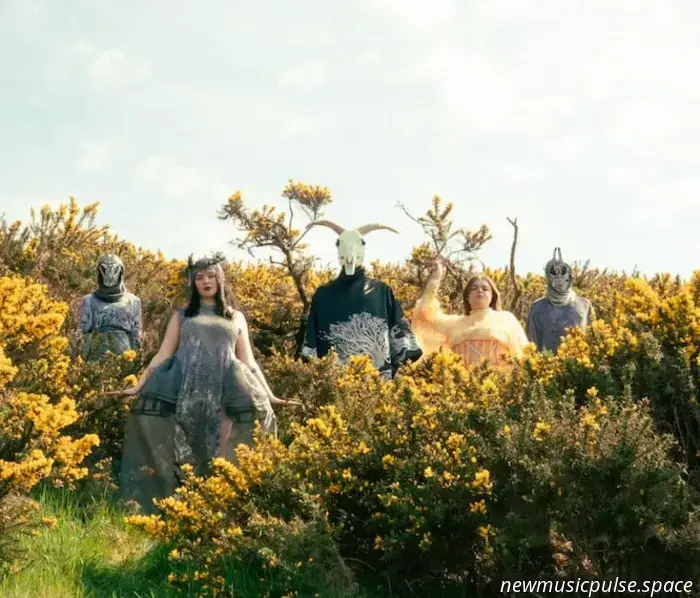
What followed is less an origin tale of a band and more a cultural intersection. The essence of Huartan — Catríona, Múlú, and Stiofán — is deeply rooted in Irish traditional music, yet the group's identity transcends rigid definitions of Irishness. Performer and visual anthropologist Anna joined initially as a dancer, but her background ended up being transformative. “Anna crafted the masks for our performances,” Catríona shares. “Carnival is such a significant aspect of their upbringing, with Swiss and Sri Lankan roots, which included mask making.” As the project grew, Anna became the visionary behind Huartan’s striking visual aesthetic — a mixture of pagan symbols, club culture, and trans-national folklore.
This interplay between the localized and the globally influenced is central to Huartan’s sound. The songs are rooted in Ulster — found in old notebooks, half-remembered tunes, and the delicate oral traditions passed through generations. However, their form, their sonic texture, is distinctly modern. “Rather than viewing them as relics of the past, we believe our culture and traditions thrive best when they are allowed to evolve and adopt new meanings,” Catríona explains.
She speaks from her own experience. Her time at the Irish Traditional Music Archives opened her eyes to a world of endangered songs, including many collected by the esteemed Brian Danny Minnie. “Some might have existed only in his archives,” she notes. “It’s almost the responsibility of the younger generation to ensure these songs endure.” Her academic research reinforced this mission: traveling back to North West Donegal to collect songs deemed “at-risk,” studying manuscripts written in sean chló, and translating them into more accessible formats. But academia alone wasn’t sufficient.
“University is complete, but these songs are still alive,” she states. “They deserve something more impactful. If we’re going to embed them in the heart of the community, they need to be more accessible… not only to traditional musicians or Irish speakers, but to everyone on the island.”
That ethos permeates Huartan’s debut album — a carefully crafted fusion of accordion, flutes, whistles, synth layers, and ritualistic percussion, produced with Seán Óg Graham (Beoga) and enhanced by contributions from Clare Sands and Laura McFadden. The tracks retain their traditional tempos; no speed-ups to conform to modern formats. “We aimed to honor the original songs,” Stiofán explains. “You’ll see that the music continues to hold its traditional pace.”
Stiofán articulates the political dimensions of the project with characteristic frankness: “For too long, the Irish language has been confined to traditional music. Activists argue it should exist throughout our culture. During live shows, the political aspect becomes even more pronounced. While a genocide currently unfolds in Palestine, and while we still endure struggles back home… in Northern Ireland, we remain effectively a British colony. All of this has become intertwined with this project.”
That fusion of art and activism comes to life most vividly on stage. Masks conceal identity; síogaí figures traverse the stage and audience. The energy verges on spiritual fervor. One of the band’s initial revelations occurred during a fire ritual at Stendhal Festival. “We tend to conceptualize after we’ve done something,” Stiofán chuckles. “It just felt right.” Later
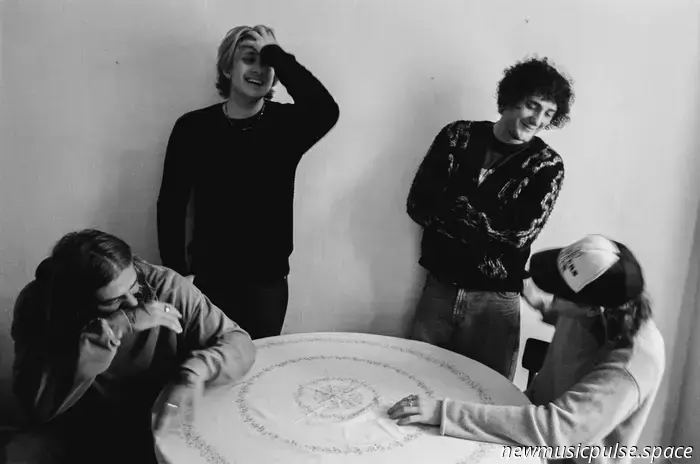
On an October afternoon, shortly before Fletchr Fletchr left for their soundcheck at Glasgow’s Tenement Trail Festival, Clash spoke with two of the four members.
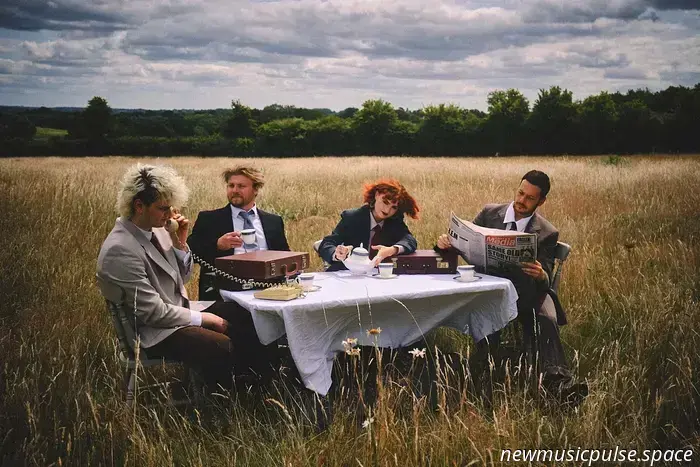
Introducing the Essex-London quartet that, although located in two different places, has combined the transitional space between them to produce their most ambitious work to date with their new EP ‘Are You Dreaming?’.
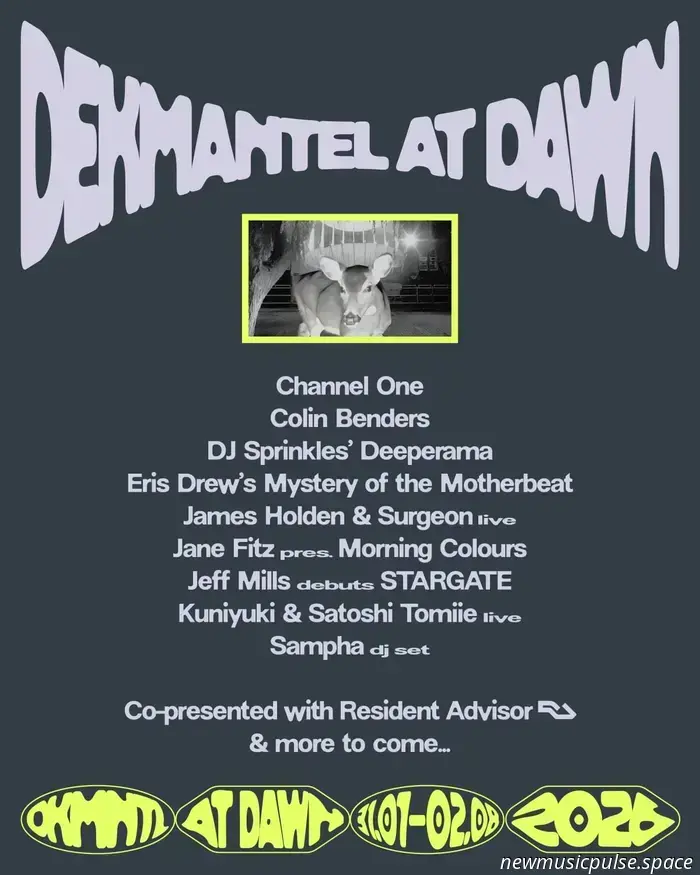
Next year, the Dekmantel Festival will enhance its weekend experience by offering a 36-hour adventure in the forest, designed for the most daring electronic music enthusiasts.
Liverpool has consistently produced musical talent for many years, featuring iconic names such as The Beatles, Frankie Goes to Hollywood, and Echo & The Bunnymen.
There’s a moment in a Huartan performance — typically when the masked dancers move into the audience and the synthesizers begin to vibrate — when time seems to become fluid. The