
Music news
Live Report: The Pains Of Being Pure At Heart – Garage, London

Live Report: The Pains Of Being Pure At Heart – Garage, London

      Memory can often deceive you. For this writer, The Pains Of Being Pure At Heart’s debut album represents a specific time and place, a cycle of indie pop songs that evokes a certain period in my life. However, time marches on—the jeans no longer fit, the trainers have developed leaks, and TikTok continually reshapes our minds.

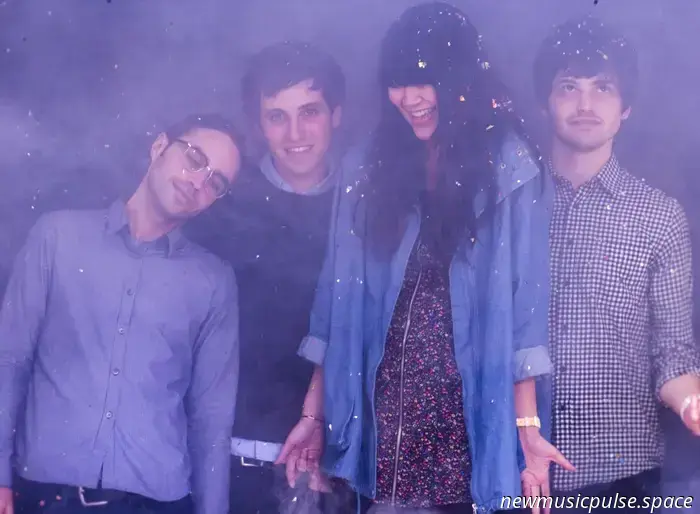
      The good news is that as the years go by, the connections within The Pains Of Being Pure At Heart have only deepened. Tonight, back in London for the first time in what feels like ages, the indie pop legends perform their debut album in its entirety, and we’re pleased to say it remains completely flawless.

      With the indefatigable Kip Burman at the helm, the band storms through each performance with the exuberance of a child on a sugar high. The riffs are electrifying, the choruses shine with fervor, and the audience hangs on every word.

      The crowd's palpable excitement is evident as the set list—arranged to align with the album's tracks—elicits gasps of surprise. ‘Come Saturday’ is magnificent and anthemic, while ‘Young Adult Friction’ and ‘Stay Alive’ continue to be unmatched blends of Sarah Records’ sentiment and Velocity Girl melodies.

      You can’t help but get caught up in the experience. Onstage, Kip reminisces about performing at the nearby Buffalo Bar, which is now sadly closed, and many in the audience raise their hands, indicating they were at that show too. It’s a delightful moment, reflecting unwavering loyalty and the lasting impact these indie pop anthems hold in our lives.

      The first set concludes with ‘Gentle Sons’, followed by a well-curated encore showcasing some of their finest work. ‘Belong’ is an outstanding piece of songwriting, while ‘Higher Than The Star’ and ‘Say No To Love’ are delightful nuggets of joy on seven-inch singles.

      Closing with the titular ‘The Pains Of Being Pure At Heart’, one can only marvel at the exhilarating enthusiasm shared by both the band and the audience. It's a blur of familiar and new faces, with social media helping to spark a new generation of indie pop fans. It's an incredibly thrilling experience that embraces emotion as a form of rebellion. Delightfully twee, once again.

      —

      Words: Robin Murray

      Photo Credit: Annie Powers

      —

Other articles

Tokyo’s hydrogen Crown program is receiving initial feedback as the sedan is introduced into taxi and police service. 

Toyota plans to deploy 200 Crown FCEV taxis in Tokyo by 2026. The Fukushima police force is utilizing a hydrogen Crown that was launched last year. Both versions maintain the original FCEV configuration, featuring a rear-mounted electric motor.

The Crown Sedan FCEV made its introduction in 2023, becoming Toyota's second hydrogen-powered production vehicle after the Mirai. This model is part of the company’s broader initiative to expand alternative-fuel mobility and hints at the potential of hydrogen for everyday transportation beyond specialized uses.

In addition to the passenger variant for Japanese consumers, Toyota has also created taxi and police car models, each aimed at testing the viability of hydrogen in practical, high-demand environments.

Starting with the taxi version, a fleet of Crown Sedan FCEVs is already operating on Tokyo's streets, with plans to expand to approximately 200 units by March 2026. Each vehicle features a distinctive black exterior, blue graphics, and unique Tokyo H2 decals on the sides.

The interior is fully equipped for taxi services, including an additional GPS system, a fare meter, and a clear barrier behind the driver’s seat. Passengers enjoy generous legroom, tablet-style screens mounted on the seatbacks, a separate touchscreen for climate controls in the central armrest, and seats equipped with a massage feature.

Toyota recognizes that the FCEV’s length of 5,030 mm (198 inches) can make it somewhat cumbersome on narrow city roads, but asserts that this is compensated by smooth acceleration and a quiet, refined ride. Taxi drivers appear to agree, with one stating, “I’ve never driven a car this good before.”

Taxi fares remain fixed at ¥500 ($3), the same as a standard Tokyo cab, making the hydrogen option a competitive alternative to the more prevalent Toyota JPN Taxi.

According to Toyota, the taxi initiative is intended to “help explore the optimal balance of hydrogen supply and demand.” President and CEO Koji Sato described it as “a tremendous first step with meaningful implications for large-scale social implementation.”

A Crown For The Police

The initiative extends beyond taxis. In December 2024, Toyota unveiled a Crown Sedan FCEV police car designed for the Fukushima prefecture, a region impacted by the 2011 nuclear disaster.

The patrol model features a striking black-and-white color scheme, equipped with roof-mounted strobe lights, bold "Police" lettering, and Mount Fuji-inspired graphics on the hood, replacing the standard Toyota badge with a gold emblem.

Both the taxi and police models utilize the standard Crown Sedan FCEV powertrain. A rear-mounted electric motor generates 180 hp (134 kW / 182 PS) and 300 Nm (221 lb-ft) of torque, powered by a fuel cell from the Mirai.

Hydrogen is stored in three high-pressure tanks, providing an impressive range of up to 820 km (510 miles) per refuel.

For those who are skeptical about hydrogen, Toyota also offers a hybrid version of the Crown Sedan, which combines a 2.5-liter engine with dual electric motors.

Tokyo’s hydrogen Crown program is receiving initial feedback as the sedan is introduced into taxi and police service. Toyota plans to deploy 200 Crown FCEV taxis in Tokyo by 2026. The Fukushima police force is utilizing a hydrogen Crown that was launched last year. Both versions maintain the original FCEV configuration, featuring a rear-mounted electric motor. The Crown Sedan FCEV made its introduction in 2023, becoming Toyota's second hydrogen-powered production vehicle after the Mirai. This model is part of the company’s broader initiative to expand alternative-fuel mobility and hints at the potential of hydrogen for everyday transportation beyond specialized uses. In addition to the passenger variant for Japanese consumers, Toyota has also created taxi and police car models, each aimed at testing the viability of hydrogen in practical, high-demand environments. Starting with the taxi version, a fleet of Crown Sedan FCEVs is already operating on Tokyo's streets, with plans to expand to approximately 200 units by March 2026. Each vehicle features a distinctive black exterior, blue graphics, and unique Tokyo H2 decals on the sides. The interior is fully equipped for taxi services, including an additional GPS system, a fare meter, and a clear barrier behind the driver’s seat. Passengers enjoy generous legroom, tablet-style screens mounted on the seatbacks, a separate touchscreen for climate controls in the central armrest, and seats equipped with a massage feature. Toyota recognizes that the FCEV’s length of 5,030 mm (198 inches) can make it somewhat cumbersome on narrow city roads, but asserts that this is compensated by smooth acceleration and a quiet, refined ride. Taxi drivers appear to agree, with one stating, “I’ve never driven a car this good before.” Taxi fares remain fixed at ¥500 ($3), the same as a standard Tokyo cab, making the hydrogen option a competitive alternative to the more prevalent Toyota JPN Taxi. According to Toyota, the taxi initiative is intended to “help explore the optimal balance of hydrogen supply and demand.” President and CEO Koji Sato described it as “a tremendous first step with meaningful implications for large-scale social implementation.” A Crown For The Police The initiative extends beyond taxis. In December 2024, Toyota unveiled a Crown Sedan FCEV police car designed for the Fukushima prefecture, a region impacted by the 2011 nuclear disaster. The patrol model features a striking black-and-white color scheme, equipped with roof-mounted strobe lights, bold "Police" lettering, and Mount Fuji-inspired graphics on the hood, replacing the standard Toyota badge with a gold emblem. Both the taxi and police models utilize the standard Crown Sedan FCEV powertrain. A rear-mounted electric motor generates 180 hp (134 kW / 182 PS) and 300 Nm (221 lb-ft) of torque, powered by a fuel cell from the Mirai. Hydrogen is stored in three high-pressure tanks, providing an impressive range of up to 820 km (510 miles) per refuel. For those who are skeptical about hydrogen, Toyota also offers a hybrid version of the Crown Sedan, which combines a 2.5-liter engine with dual electric motors.

Plain Mister Smith's "Andy Warhol" is a vibrant, energetic indie rock track that serves as a feel-good anthem, transforming our tumultuous inner turmoil into something lively, memorable, and completely refreshing.

Emerging from the pain of unhealed trauma and her personal quest for closure, singer/songwriter Marem Ladson’s “Cavity” is a hazy, weighty, and profoundly intimate release – a quietly intense confrontation that establishes her as one of the most significant artists to keep an eye on in 2026.

O.P. Jewellery and Ragnar Persson Commemorate the Historic Mythology of the Magpie

O.P. Jewellery and Ragnar Persson Commemorate the Historic Mythology of the Magpie

The Stockholm-based jewellery brand O.P. Jewellery has introduced its latest collection, created in collaboration with fellow artist Ragnar Persson, also based in Stockholm.

Live Report: The Pains Of Being Pure At Heart – Garage, London

Memory often deceives us. For this writer, The Pains Of Being Pure At Heart's first album is truly a record tied to a specific time and place, embodying indie pop.